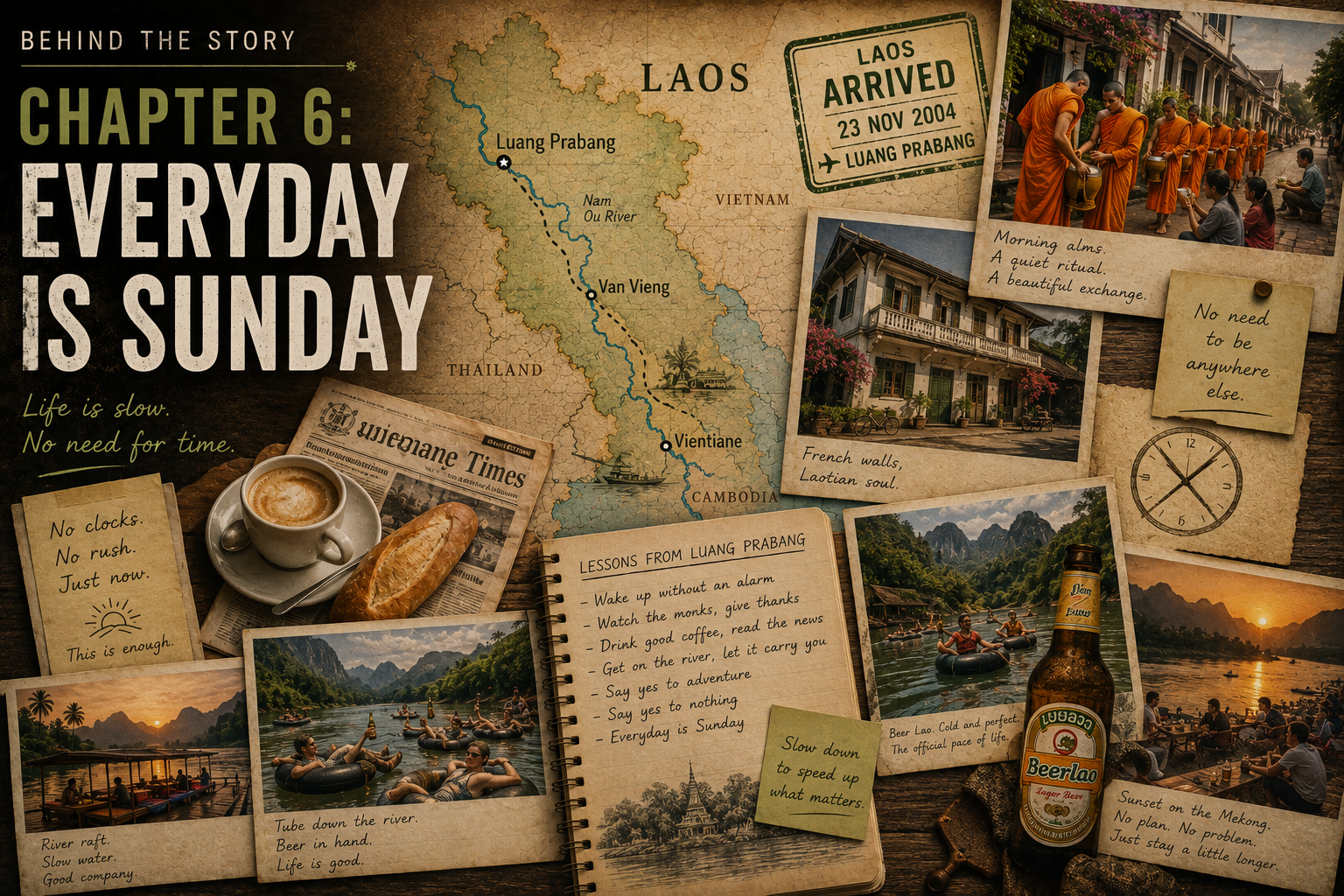
Behind the Story: Chapter 6 — Everyday Is Sunday
What if having nowhere you have to be isn't the same thing as being free?
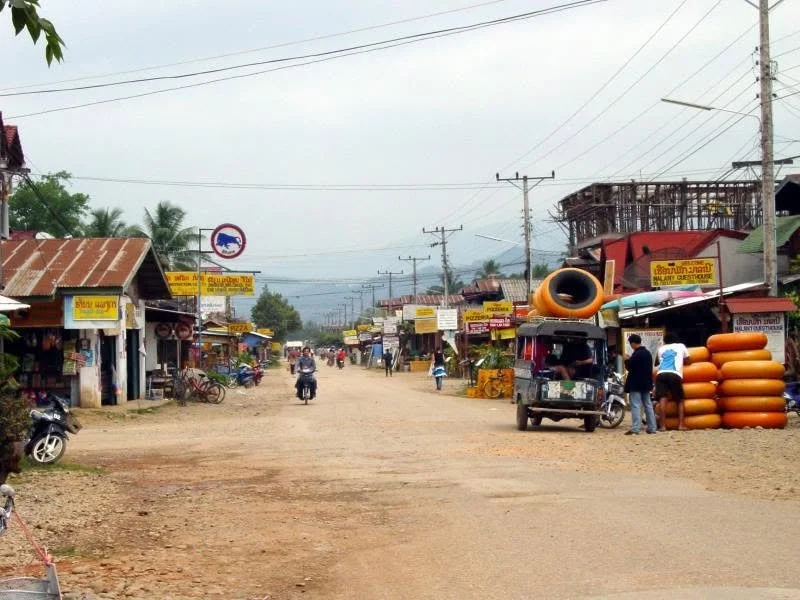
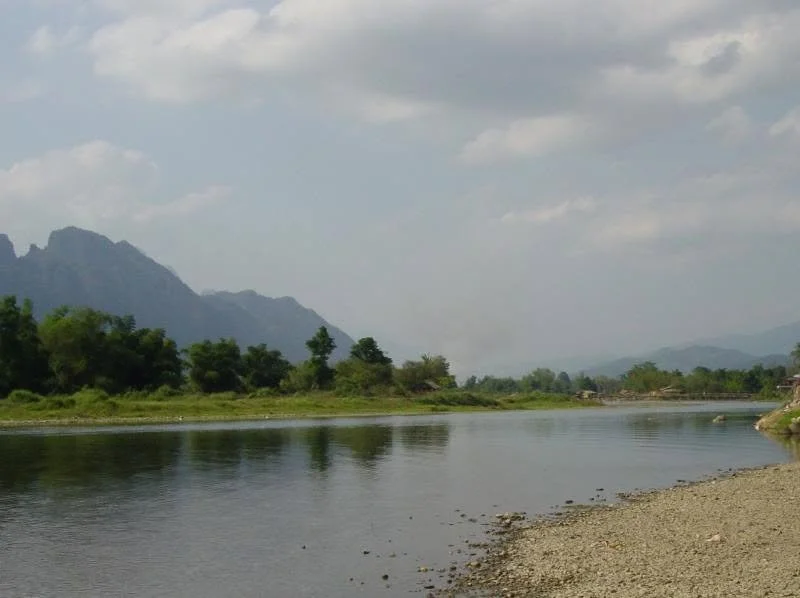
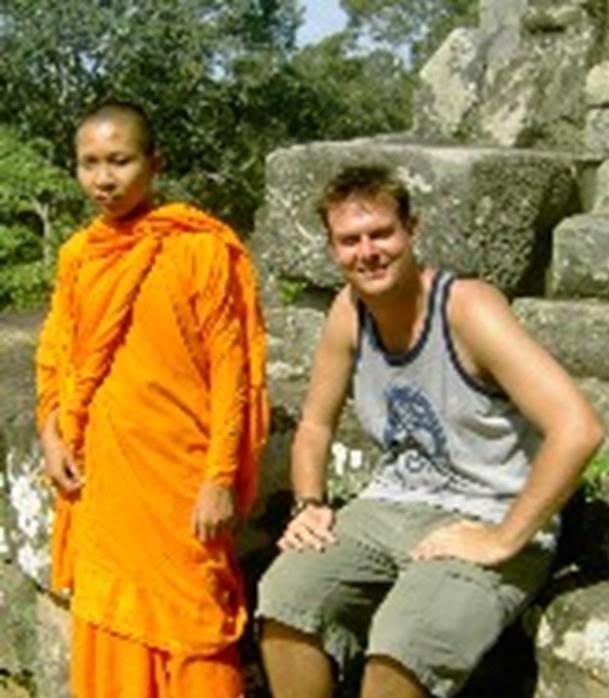
Luang Prabang, Vang Vieng Laos Dec 2004
The Chapter
From Hanoi, the journey continues into Laos, and Chapter Six settles into a stretch of the trip where the days stop bothering to introduce themselves. Luang Prabang offers something Darren hadn't realized he was looking for — mornings with nowhere to be, and the strange relief of discovering that nothing is waiting on him.
Then comes Vang Vieng, and with it a version of travel that has less to do with seeing a country and more to do with disappearing into it for a while. No itinerary. No plan. Nothing that needs deciding before tomorrow. But somewhere inside a schedule with no actual schedule, a specific feeling starts creeping in — one Darren doesn't expect, and doesn't have a name for yet, except the one the chapter eventually gives it.
Every day starts to feel like the day after the party, whether or not there was a party the night before.
Chapter Six is about what happens when the reward you've been chasing finally arrives — and comes with a catch nobody warns you about in advance.
Behind The Story
Luang Prabang Before It Changed
I arrived at a particular moment in the life of that town and had no idea, at the time, how temporary that moment was. Quiet streets, slow mornings, a place that hadn't yet fully worked out what it was going to become to the rest of the world. It's a different town now, by every account I've heard since—more travelers, more infrastructure, more of everything that eventually finds its way to a place once enough people start talking about it.
I don't think that makes the town worse. I think it just means I happened to walk through it during a version of itself it was never going to hold onto for long, whether or not I was paying close enough attention to notice.
The Last Innocent Vang Vieng
We thought we were simply having a great day on the river. We had no idea we were living through the last version of Vang Vieng before the rest of the world caught up with it.
The bamboo beer poles, the tubing, the rope swings, the specific accidental magic of a group of strangers stumbling into what felt like the perfect afternoon—none of it felt like it was heading anywhere. It just felt like a good day, the kind you assume a place like that produces regularly, indefinitely, for anyone lucky enough to pass through.
It wasn't until years later that I learned what came after—the growth, the deaths, the eventual crackdown that shut most of the riverside bars down for good. I don't think that makes the day we had any less real. It just means none of us floating down that river had any way of knowing we were closer to the end of something than the beginning of it.
Every Day Is Sunday
The title didn't come to me in the moment. It came later, trying to find language for something I'd only actually noticed sideways, without meaning to.
I wasn't trying to live in the moment, not deliberately. I just realized, at some point in that stretch, that I'd stopped checking the time—and that the not-checking had started to feel less like freedom and more like a low hum underneath everything, a feeling I didn't have a name for yet.
At home, Sunday had always meant Monday was coming. In Laos, there was no Monday waiting around the corner.
I hadn't expected that to feel unsettling. For a while, it did anyway.
What I know Now
At the time, I thought Laos had taught me how to slow down. Looking back, I think it taught me something more complicated: how uncomfortable I was when there was nothing left to chase.
I'd spent years believing that freedom meant having nowhere I had to be. In Laos, I finally got exactly that—and discovered that removing the schedule doesn't automatically remove the restlessness underneath it.
Koh Tao had shown me how little I needed. Laos showed me how good it could feel to need nothing at all. But neither place could teach me how to stay that way once I went home.
I thought I had escaped the Monday waiting around the corner. I hadn't yet realized I was carrying it with me.
Twelve Days
The memoir moves fairly quickly from Laos into the return home in Chapter Seven, but the actual route wasn't quite that direct. From Laos we took the slow boat back up the Mekong into Thailand, then on through Chiang Rai and Chiang Mai, before flying down to Phuket and taking a ferry out to Koh Phi Phi.
I left Koh Phi Phi on December 14, 2004.
I only think about that date because of what happened twelve days later.
On December 26, an earthquake somewhere in the range of magnitude 9.1 to 9.3 ruptured off the coast of Sumatra and triggered the Indian Ocean tsunami, the deadliest in recorded history. An estimated 230,000 people across a dozen countries lost their lives that day.
Koh Phi Phi was hit particularly hard. The island sits on a narrow isthmus, land pinched thin between two beaches, which meant the wave came in from both directions at once. More than a thousand people died there, most of them foreign travelers, and much of the island's infrastructure was destroyed.
I can't claim I narrowly escaped anything. I left twelve days before it happened, which in any practical sense isn't close at all. But I still think about it more than the math should probably justify—about a fault line that had been quietly loading pressure for millions of years, and let it go in a single instant, twelve days after I'd already moved on to somewhere else.
A microsecond, geologically speaking, standing between where I happened to be and where I could have still been.
I've gone back to Koh Phi Phi twice since—once in 2017, again in 2019. Aside from the tsunami warning signage now built into the island's infrastructure, you'd genuinely never know that a disaster of that scale had happened there. The island rebuilt. Thailand rebuilt. Indonesia rebuilt entire coastlines that had simply ceased to exist that morning.
I'd like to believe I would have recognized the signs—the ocean pulling back further than it should, the specific wrongness of a tide behaving like nothing I'd seen it do before—and gotten to higher ground in time. Twenty years later, I still think about the people who didn't get that chance, and I still catch myself replaying it, running the scenario differently in my head until it comes out the way I want it to.
I think, if I'm honest, it's simply easier to believe I would have survived than to sit with the alternative—that I had no control over any of it at all, and the only thing that actually kept me alive that week was a travel itinerary I didn't choose for any reason more meaningful than convenience.
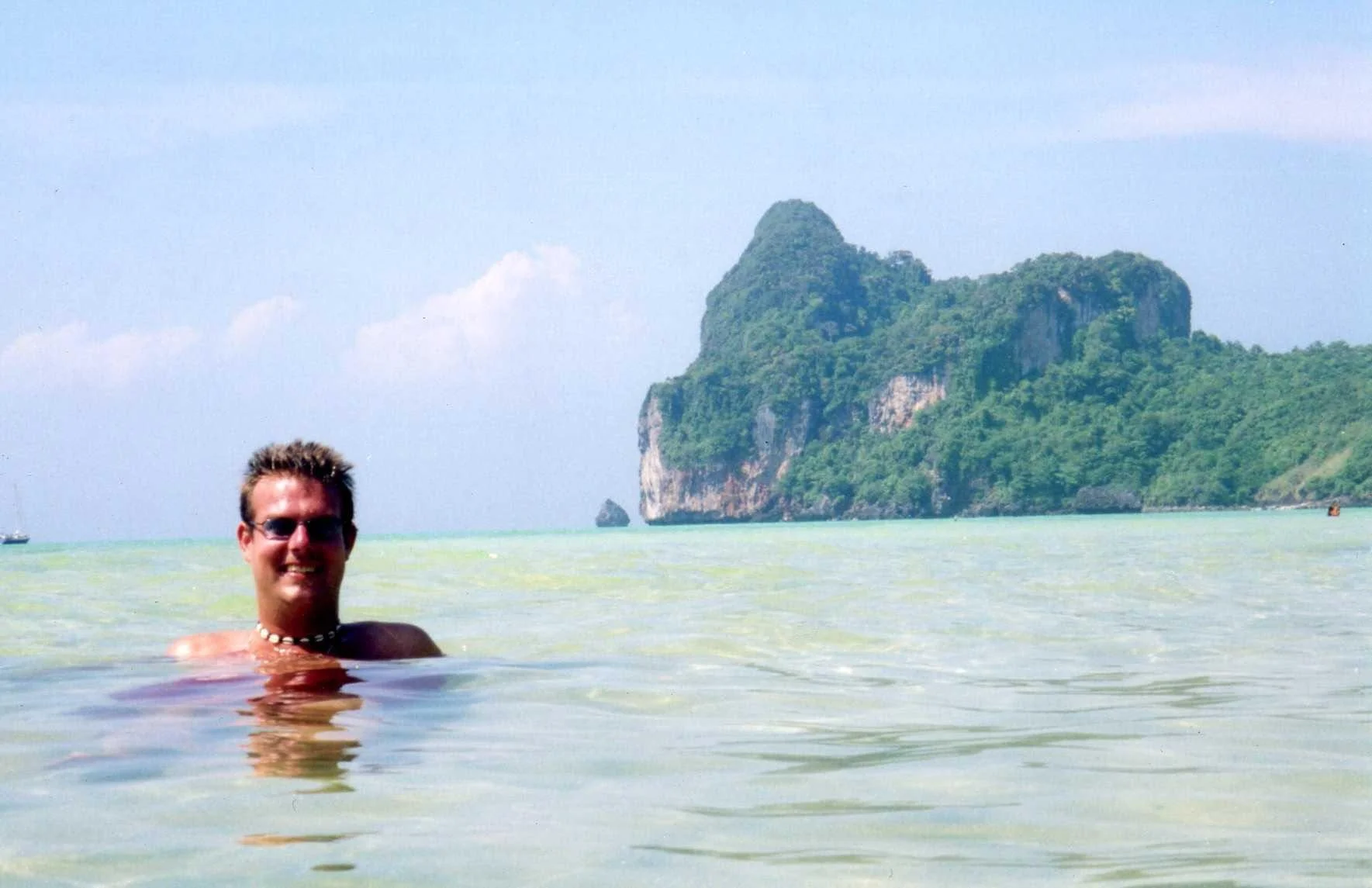
December 14th, 2004, Koh Phi Phi- The last photo of me before I returned home after 6 months abroad. 12 Days prior to the Tsunami
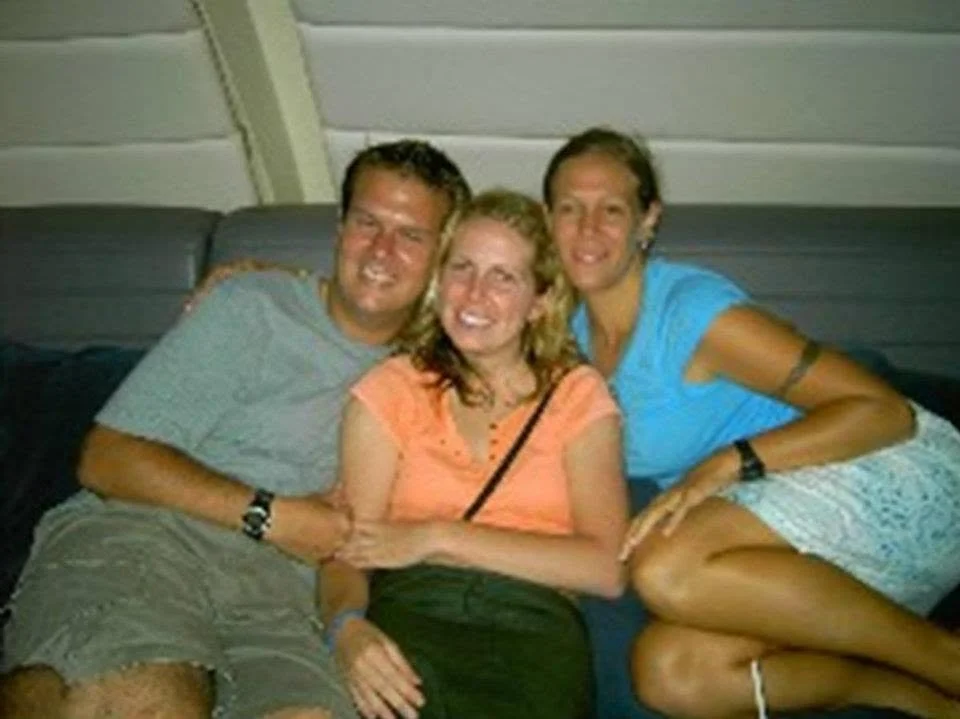
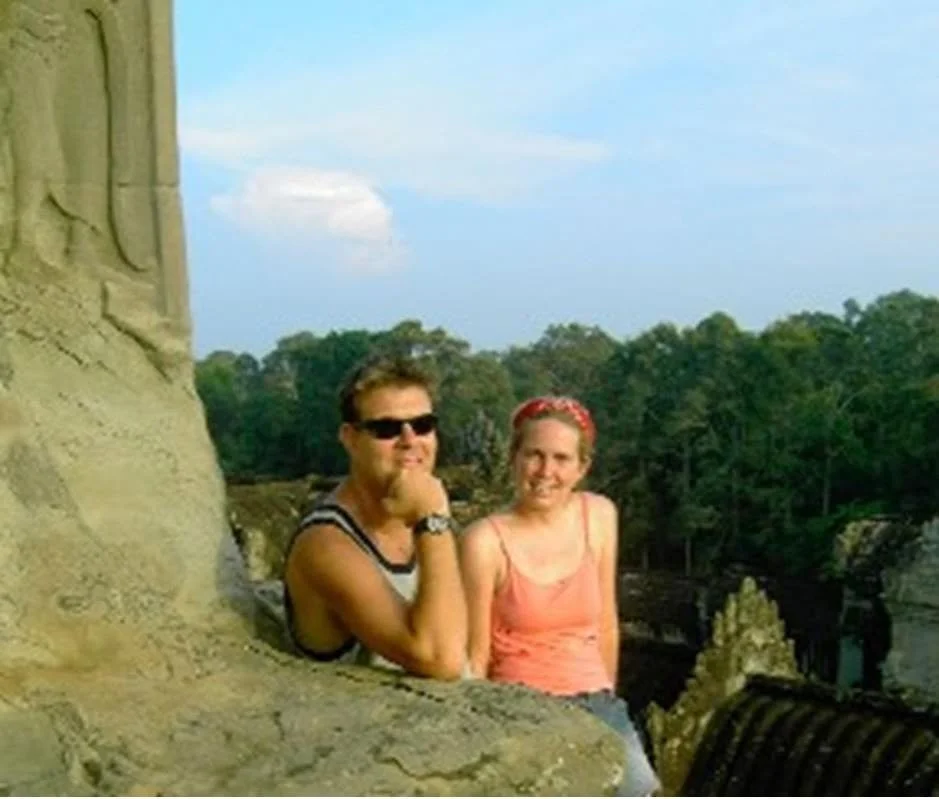
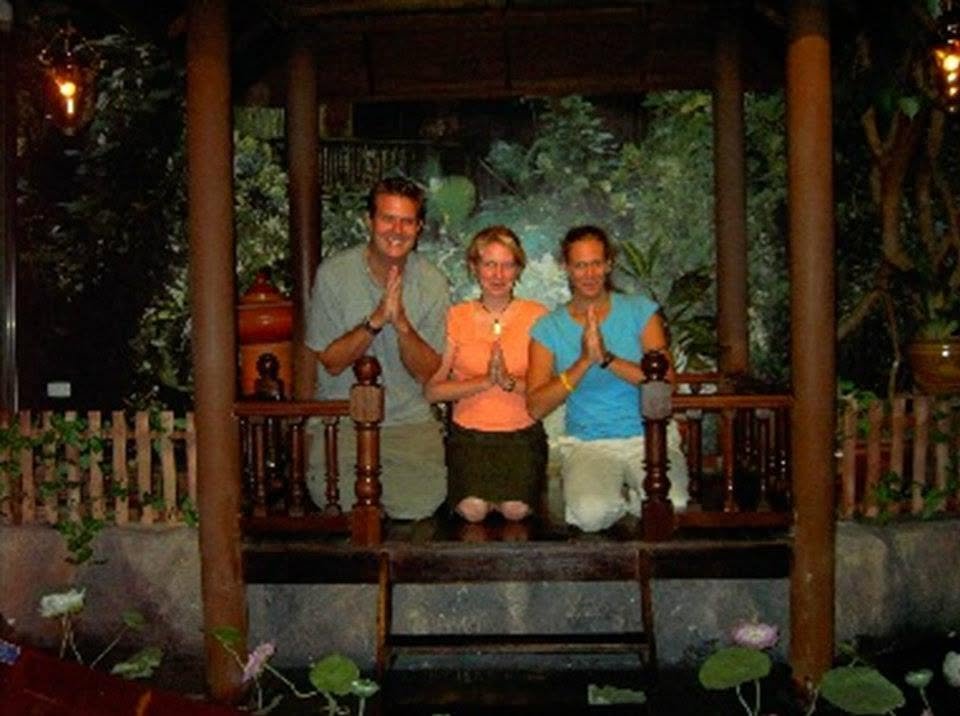
The Album: December 2004