Behind the Story: Chapter 12 — Let Me Go
What if you can't understand where you're going until you let go of where you've been?
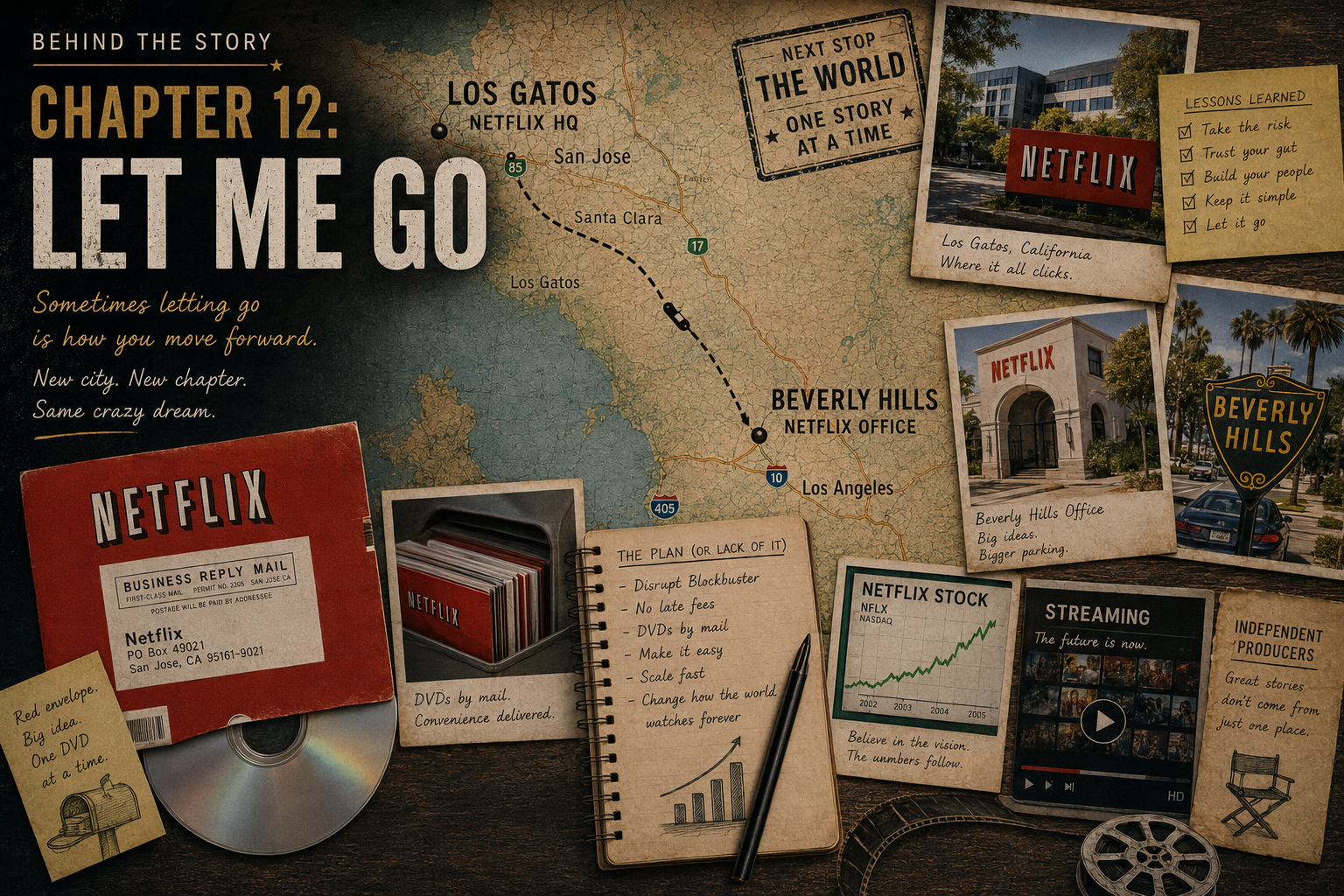
The Chapter
After years spent trying to escape bureaucracy, permissions, and rigid schedules, Darren discovers something he hadn't considered: maybe the problem was never work itself. Maybe it was always the way work got structured around him.
At Netflix, productivity matters more than appearances. Nobody seems particularly interested in where he's sitting, how many hours he's logging, or whether he's taking enough vacation. The expectation is simpler than anything he's encountered before: do the job, do it well, and own the result.
For a while, that's the whole story — the dream, finally delivering on exactly what it promised.
Then something happens that Darren doesn't see coming, and "Let Me Go" turns out to mean something considerably more complicated than a company culture built on trust.
Chapter Twelve is about the difference between a system that lets you go because it doesn't need you anymore, and one that lets you go because it's finally time.
Behind The Story
The Man Who Dismantled His Own Company
When I joined Netflix, I didn't fully appreciate how unusual Reed Hastings was. I knew the company was successful. I knew Netflix had changed the way people rented movies. What I didn't understand yet was just how radical the transformation actually was.
Hastings had built the company around DVDs delivered through the mail, at a time when Blockbuster still dominated the rental business. Then he did something that, in hindsight, was almost unthinkable: he started dismantling the very business that had made him successful. Netflix moved from physical DVDs toward streaming while DVDs were still generating enormous revenue — willing to cannibalize the thing that was working before someone else did it to him first.
That takes a particular kind of confidence, or maybe just a particular willingness to accept that the thing that made you successful yesterday might be the thing standing in your way tomorrow. I found that fascinating, watching it happen from inside the company, while simultaneously trying to figure out my own career.
Freedom Wasn't an Accident
The other thing I didn't fully appreciate at first was how deliberate the culture was.
Netflix wasn't simply a company with free lunches and unlimited vacation. Those were visible expressions of a much larger idea: hire good people, give them enormous autonomy, and hold them accountable for what they actually accomplish. After years surrounded by systems built on approvals and schedules and the quiet assumption that employees needed to be managed closely, Netflix felt almost backwards. Nobody cared whether I arrived at eight or stayed until six. They cared whether I delivered.
For someone who'd once quit a job over a three-signature pencil, that distinction wasn't lost on me.
The Day the System Let Me Go
Here's the part the chapter title is actually about, and the part I've talked around in earlier drafts of this post: I didn't leave Netflix. Netflix let me go.
I won't walk through the specifics of that day here — some of it belongs to the chapter, not to a blog post written years later. What I will say is that it didn't feel, in the moment, like anything except what it looked like: an ending. A door closing on a job I'd genuinely loved, at a company I still believe in, for reasons that had very little to do with whether I was good at it.
What I couldn't have seen yet, standing in the middle of that ending, was the chain of events it actually set off. That layoff sent me back toward China. China put me in a room with Mr. Yao. Mr. Yao's world opened into an entire chapter of my career I never would have had any other way — one that, years later, played its own part in getting me to a keyboard writing this book at all. I don't think that chain is an exaggeration. I think it's close to literal. Pull that one afternoon out of the sequence, and a fair amount of what came after it doesn't happen the way it happened, possibly doesn't happen at all.
I didn't get to see any of that while I was living it. Nobody does. You only ever get to see the chain looking backward.
What I Know Now
At the time, I thought I'd finally figured out what I wanted from work. Netflix gave me autonomy, trust, a system that didn't need escaping — everything I'd spent years looking for, in the exact shape I'd been looking for it. I didn't yet understand how extraordinary that opportunity actually was, or how little any of it would matter to the actual lesson the chapter was building toward.
Because the real education wasn't the culture. It was the ending.
If I'd invested five hundred dollars a month for the six months I worked there and simply held the shares, that investment could have grown into something approaching two million dollars over the years that followed — depending on the exact dates and a fair number of assumptions I'm not equipped to make precisely. I didn't invest anything. I was young, earning a paycheck, paying rent, thinking about whatever came next. You don't always recognize a fortune while you're standing inside the moment that creates it.
I've come to think the layoff worked the exact same way, just in the opposite direction. I couldn't see the fortune when I was inside the winning moment. I also couldn't see the gift when I was inside the losing one. Both times, I was too close to the thing to read it correctly. Both times, it took years of distance before the shape of what had actually happened became visible.
I've said it plainly elsewhere in this book, and I'll say it again here, because it's still the truest thing I know about that entire chapter of my life:
The best thing Netflix ever did for me was let me go.