Behind the Story: Chapter 3 — Mother of Waters
October 14th, 2004
The Chapter
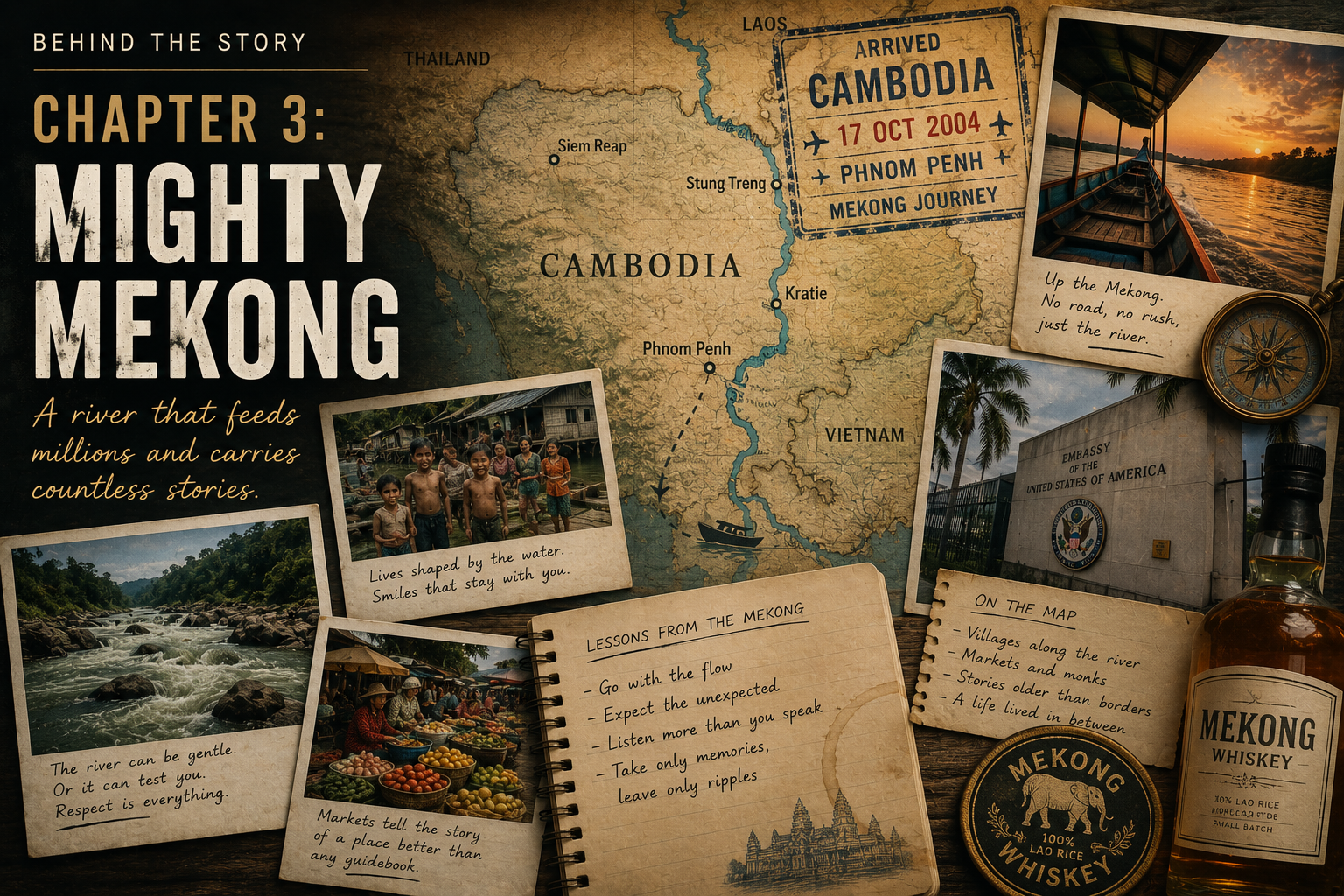
From Thailand, Darren crosses into Cambodia, and the Mekong River becomes something more than scenery almost immediately. It's not just a body of water on the way to somewhere else—it's a river with a history most travelers never bother to learn, and a temperament that doesn't care whether you've learned it or not.
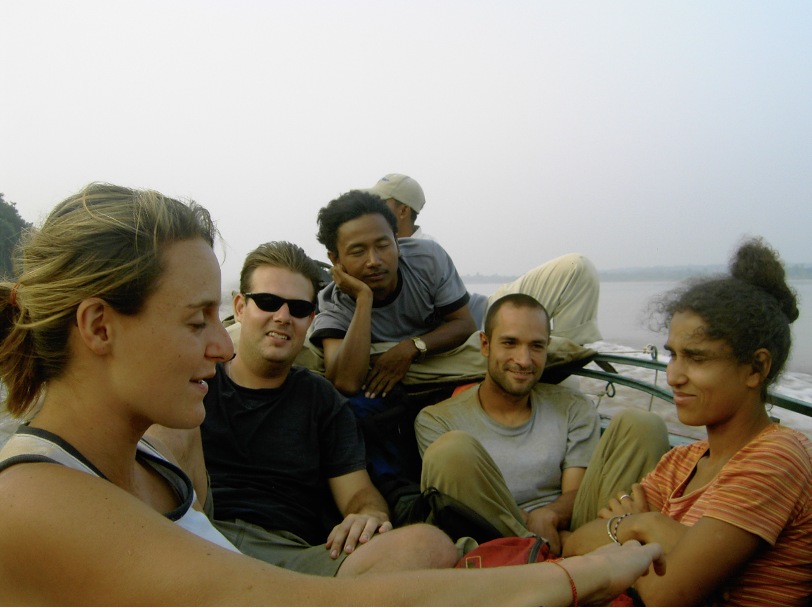
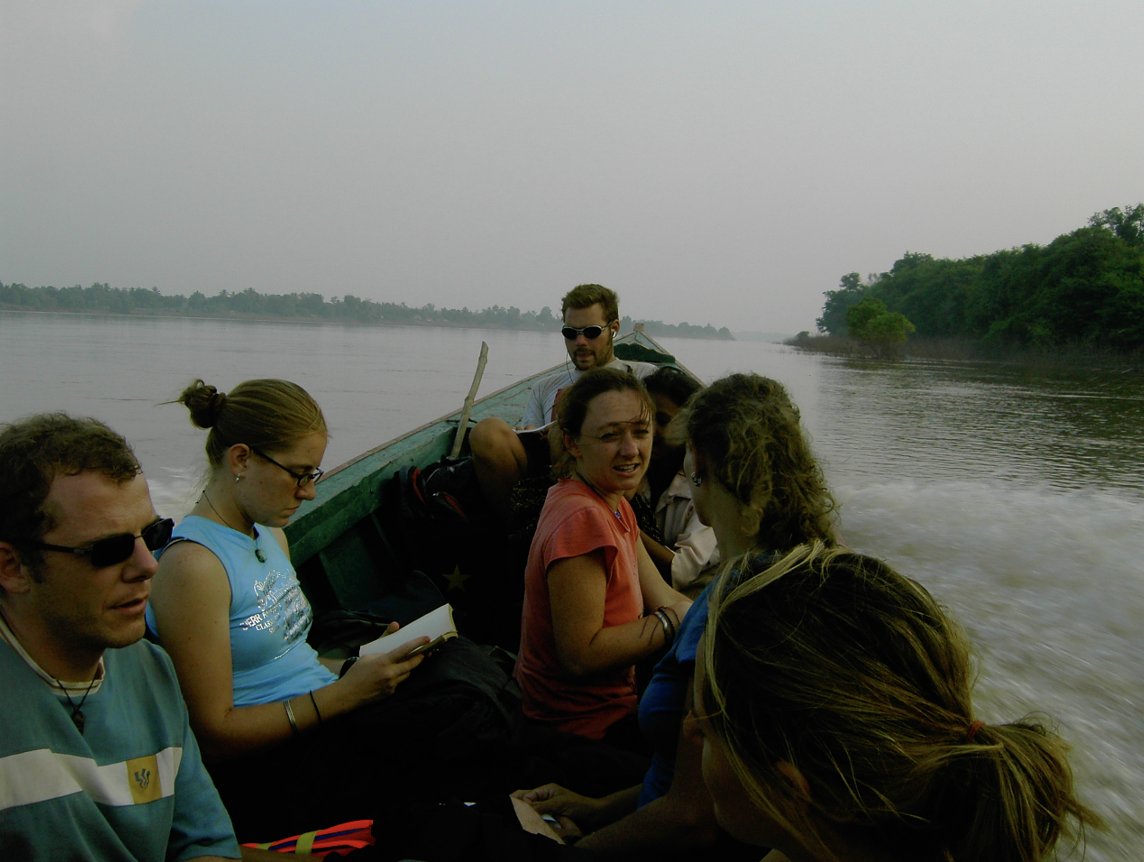
A market scene early in the chapter sets a deceptively easy tone—noise, color, the ordinary chaos of a place still finding its footing. Then the journey takes Darren and his companions deeper into Cambodia, through remote villages and rough roads, until the road finally gives way to the Mekong. What begins as another stretch of the journey becomes something much more uncertain once they decide to travel downriver by longtail boat.
The river is beautiful, enormous, and increasingly unpredictable. What happens on the water changes the pace of everything that follows, and by the time Darren reaches the other side of it, “float, don't fight” has stopped being something a stranger says in passing and started becoming something he actually has to do.
Chapter Three is the first time the book asks a question it will keep asking, in different water, for the next twenty years: what do you do when you can't control the current?
Some lessons you don't get to choose the classroom for.
Behind The Story
The Mekong's Real History
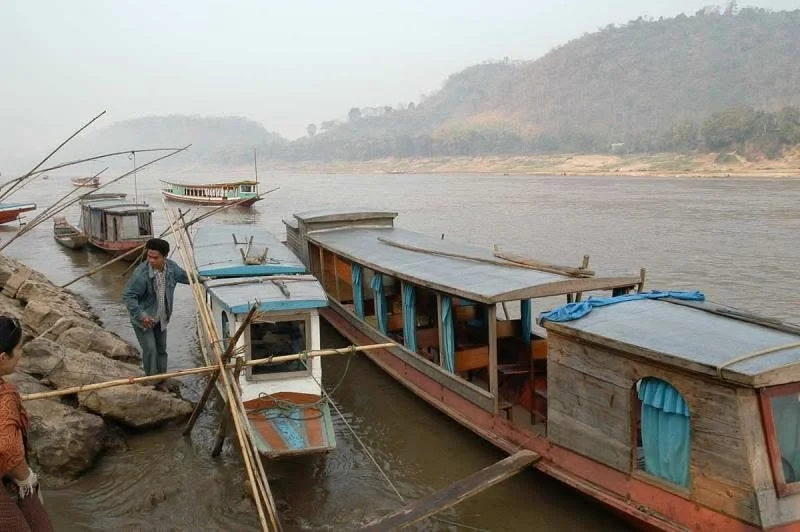
The river's name in the region translates roughly to “Mother of Waters”—not a poetic flourish I added for the chapter title, but the literal meaning behind the name locals have used for centuries. It's the twelfth-longest river in the world, and through Cambodia and Vietnam it isn't just a body of water people admire from a boat. It's agriculture, transportation, and a major source of the region's food supply, all running through the same channel. It carries more weight, historically and practically, than a chapter's worth of scenery description could ever really convey.
Why Angkor Wat Isn't in This Book
We spent three full days in Siem Reap touring the Angkor ruins, and I want to be honest about something upfront: it wasn't that Angkor wasn't worth writing about.
It was.
At its peak, the city of Angkor had over a million inhabitants. In that same era, Rome had roughly fifty thousand. The temple complex is enormous, and what makes it genuinely unforgettable isn't just the scale—it's watching the jungle reclaim it in real time, roots growing directly into and out of stone that was never built to share space with a tree.
I spent those three days completely absorbed—in the engineering, the astronomical alignments built into specific temples, the enormous water-management systems, and the sheer ambition of a civilization that built something on that scale centuries before anyone had modern tools to do it with.
Angkor earns every bit of its reputation.
So why isn't any of it in the book—not a chapter, not a paragraph, not even a passing mention?
The honest answer is that Angkor has become almost too easy to write about. It's one of the most photographed, most documented, most written-about sites on Earth, and there's a version of a travel memoir that would use it as a centerpiece—pages of history, architecture, astronomy, all the material I genuinely loved learning.
That version would also be, in a way that matters to me, the easy way out.
Anyone can research Angkor Wat and write something accurate and impressive about it. That's a Wikipedia page with better prose, not a memoir.
What I actually wanted this book to do was different. I didn't want readers simply learning about my journey. I wanted them inside it—not watching from a respectful distance while I narrate a UNESCO World Heritage Site, but actually walking next to me through the parts of the trip that changed something in me, even when those parts were smaller, stranger, or less objectively impressive than a thousand-year-old temple complex.
Angkor is remarkable.
It's also, in the specific and slightly uncomfortable way that matters for this kind of book, not about anything.
It didn't crack me open the way the river did, three days later. It didn't ask anything of me. I could have written five beautiful pages about it and told you almost nothing true about who I actually was that week.
So it isn't in the book.
Not because it wasn't extraordinary—because being extraordinary was never actually the bar I was trying to clear.
What I Know Now
There's a phrase that shows up early in this chapter—float, don't fight—that I didn't fully understand the size of when I first heard it. On the water, it meant exactly what it sounds like: stop struggling against a current stronger than you are, and let it take you somewhere instead of drowning trying to beat it. I wouldn't hear a version of that same idea again for years, in a completely different context, from people who'd never been anywhere near a river in Cambodia. By then, it wouldn't be about water at all.
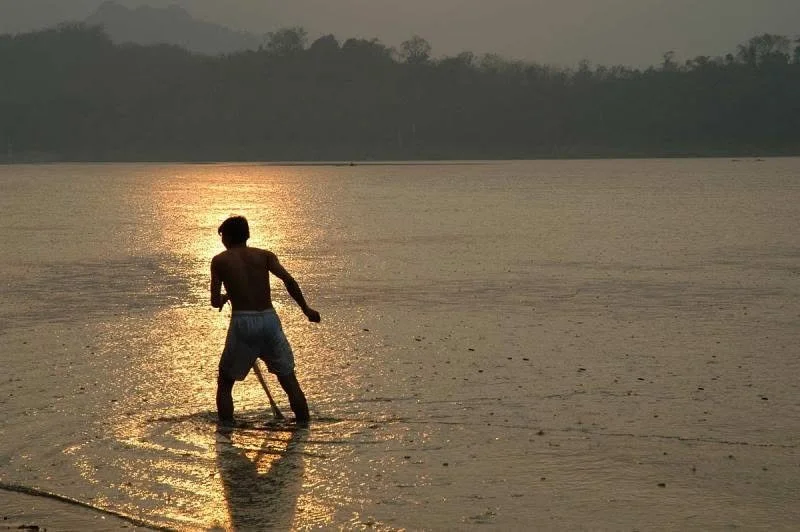
I didn't know that yet, standing waist-deep in the Mekong. I just knew my body had somehow understood the instruction before my mind had caught up to it.
The other thing I didn't expect from that stretch of the trip had nothing to do with the river.
Cambodia, in 2004, was an extraordinarily poor country by almost any economic measure. Some of the homes we passed while touring the plantations near Stung Treng were thatched huts with dirt floors, no different structurally from how people in that region had been living for generations. I hadn't noticed poverty the same way in Thailand. Thailand markets itself, not inaccurately, as the Land of Smiles. But something about Cambodia hit differently, and it took me a while to understand what.
I don't think it's that having nothing makes you happy—that's too simple, and I don't actually believe it. What I think I witnessed instead was something closer to a total absence of pretense. The Khmer people I met on that trip weren't performing warmth for tourists, the way hospitality can sometimes feel choreographed in places that have fully built an economy around visitors. It felt more like they were simply meeting you exactly where you were, with whatever they actually had, because that's what was available to give, and it never occurred to them to give less than that.
Thailand is the Land of Smiles. I've thought, ever since that trip, that Cambodia deserves to be known as something closer to the Land of Hearts—not because the people there have less to protect, but because so many of them, in my experience, didn't seem interested in protecting it at all.
I didn't have the tools yet, at twenty-four, to understand why that unsettled me as much as it moved me. I'd grown up around a version of comfort that came with its own quiet walls—the specific guardedness that shows up once a person has something to lose.
Watching people with almost nothing extend themselves without any of that caution didn't just teach me something about Cambodia.
It made me start wondering, for the first time, what exactly all my own comfort had been protecting me from.
THE ALBUM
Cambodia — Oct 14th, 2004
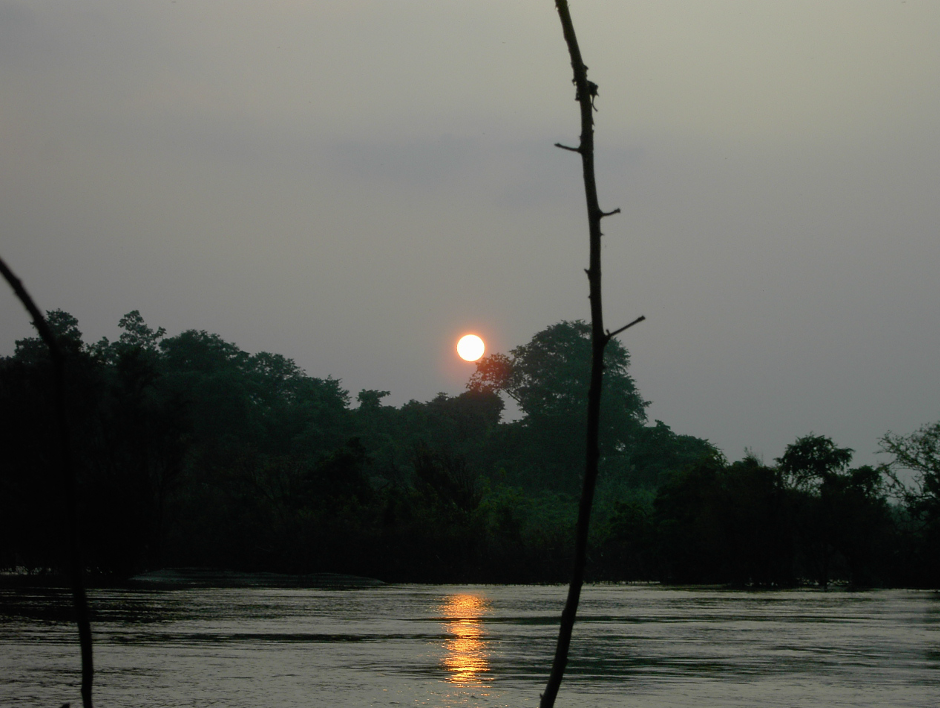
Almost all of my photographs of Cambodia to date were destroyed or ruined. The 5 keepsake photos that survived just happened to be emailed home, and thus recovering them was the easy part. Our imaginations will have to do the rest.